What's the point of literature notes?

I'm a beginner that's been using the Zettelkasten method (found out about it from Sönke Ahrens' book) for a few good months but I find myself worrying over the fact that I spend more time writing literature notes than permanent notes. When I began writing for the first time they were huge essays so I tried writing them more concise (kind of like mini-essays?) but as time passed I started to lose the point as to why one should even write literature notes in the first place.
IIRC Niklas Luhmann didn't even really write literature notes (and if he had to he would just write the source and page he got the information from, maximum a 1 sentence summary, do please correct me if I'm wrong about this) and I was wondering if this is the right way to write literature notes?
Any help would be greatly appreciated. I wish you all the best!
Howdy, Stranger!
Categories
- 3K All Categories
- 153 Research & Reading
- 703 The Zettelkasten Method
- 12 Knowledge Work
- 102 Writing
- 474 Software & Gadgets
- 158 Workflows
- 733 The Archive
- 15 Plug-In Showcase
- 88 Resolved Issues
- 225 Projects Logs and Journals
- 86 Project: Zettelkasten.de
- 53 Critique my Zettel
- 179 Random
- 375 Introduce Yourselves!
Comments
You can find examples of Luhmann's literature notes in comment 24883 and comment 25053.
The point of literature notes depends very much on your reading goals and reading strategy. I found the advice in How to read a book valuable.
The point also depends on your note-taking goals. What kind of notes do you want to have available later?
Hi @harr , sorry for responding a bit late, it took me a while to properly think about how to answer. Thanks a lot for your examples and to answer to your questions:
Thank you for taking the time to respond!
I find reading notes useful for this kind of reading. That's where I think in writing while reading a book.
That's a classic way of note-taking. It is recommended by well-regarded authors like Umberto Eco and many more.
Same here. ;-) In my digital Zettelkasten I decided on a very simple solution: embrace the mess!
My reading note are messy, because they are a working tool. I use them for questions and drafts and thinking and everything else that is related to a source.
Personally, I do both:
Having reading notes makes it easier to keep the atomic notes neat. I don't have to write atomic notes just to make random details findable in my zettelkasten. My collecting needs are covered by the reading notes. :-)
The reading notes also allow me to capture context that is useful for more than one atomic note (or zettels, as I like to call them). I simply link the reading note (or source note, as I like to call them).
So maybe as a rule of thumb: all the messy details go into the source notes, including bibliographical data and reading notes, so that I can write fewer and more concise zettels.
I like to store source notes and zettels in the same system (the same Obsidian vault), because I like to link them both ways. Source notes link zettels, zettels link source notes.
Another way to think of it is that having messy source notes removes some of the pressure from writing zettels. If I don't know how to write a zettel about something I read in a book, I don't obsess about it. I write that idea/thought/fact/insight/detail down in the source note, where I can find it easily when I need it.
Alright, thanks for your feedback @harr , I'll probably keep experimenting with the format for literature notes (reading/source notes, not sure which name to use) so that there's a healthy compromise between length and time spent on them so that I can focus a lot better on the permanent notes I want to actually write.
Have a nice day or night
Thanks, you too!
@libver I had a similar experience and simply skipped the literature note step.
This is how I process a source, for example: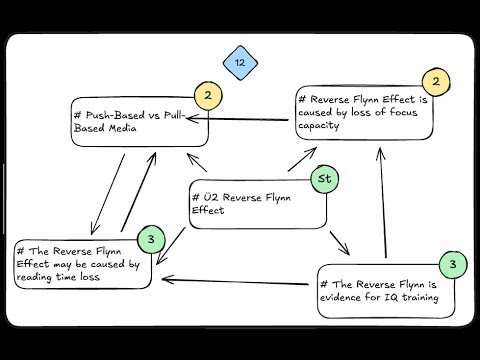
The closest thing that I create to a so-called literature note are dedicated notes for core sources that I will revisit repeatedly (Nietzsches work, the Bible, etc.)
I am a Zettler
After I put the reference into Zotero, I create a "literature note" as a google document in a folder in my google drive. Since a lot of my reading is digital, the underlining I do and notes I take while reading are easy to put into the note.
But the power of these notes for me is what I do at the top (above the quotes and notes) - a 2-3 sentence summary of why the source is important for my thinking (aka the three most important points of the paper/book... sometimes as bullet points).
To add my (low value) 2 cents worth, I do not use literature cards at all. I simply put references to specific books or papers directly in each zettel (where that is appropriate). If they are technical (engineering) articles or papers, then I usually keep a pdf copy on my hard drive, which are usually highlighted and sometimes with added comments. But I feel no obligation to include those somehow in my ZK, as that would serve no purpose (for me).
Hello everyone! Again, apologies for necroposting (life is busy and I haven't been able to respond quickly) and I truly appreciate the amount of attention and comments this thread has gotten, I'll try to answer to everyone in this single comment:
Hi Sascha, I watched the video and honestly I'm quite impressed (off-topic but love your articles as well)! While watching the video I did remember another cause as to why I was worrying about literature notes, which was that I began treating them as my main notes while neglecting the atomic notes I was supposed to make. Thank you for providing the video as it inspired me to heavily consider removing writing literature notes as a whole from the note-taking process.
Interesting to say, I do think that's viable as well, using Zotero and creating mini-literature notes as a separate document to have most of the focus on the important notes. (I do hope that I have correctly interpreted your comment, thank you for your idea!)
For me honestly I don't see your comment as 2 cents worth, it matters to me a lot that you took your time to read my post, write a comment and then posted it
I heavily resonate with your procedure as I was thinking that this would be my final decision as to this whole dilemma, since I also still want to have a reference from where I got the original material while also removing literature notes from my Zettelkasten
As I say again, thank you all for commenting and I wish you all the best
While my general workflow is closer to @Sascha’s, I’ve made a habit of creating literature notes for various types of content like books, podcast episodes, blog articles, etc. This is because I’m a bit of a hoarder in the sense that I consume a lot of it, shallowly but widely. I often highlight or summarize the material, or let AI do some of it, so that I can eventually transfer ideas to more “permanent” notes by rewriting them in my own words. So those “pre-processed” materials are stored in my literature notes. In a sense, my literature notes work more like an inbox or “fleeting notes.”
I do this because I consume way more content than I could ever diligently “process” at once, but I consume it for a reason; that reason being that connections eventually emerge. This setup helps me find serendipitous connections to things I’ve consumed, but have since forgotten about.
That last part is something I could also do if I could run a full-text search on everything I’ve ever consumed. Since that’s not possible for me, leaving potentially interesting material in my literature notes is a compromise, but a fairly good one in my opinion.
I suggest to keep your aim towards the objectives (tangible outcomes). Literature notes aim to provide you with a method to use a source as an access point to its content. This can be achieved by searching for the citekey (in the video I didn't cite a lot because Newport's newsletter provided me with reasons to think-write about the Flynn-Effect and I didn't refer to Cal Newports article as far as I remember).
Objectives may be for example:
The method and the various techniques/workflows/etc. are just means to achieve the objectives. The objectives are the operationalisation of the goal (e.g. learning, publishing, etc.)
I am a Zettler